
What Is a Ziptrack Screen? Why It's Perfect for Hyderabad Balconies
The Bottom Line Up Front
A Ziptrack screen is a motorized or manual retractable screen system with a unique zipper edge sealing mechanism. Unlike regular mosquito nets that leave 2-5mm side gaps, Ziptrack locks the mesh into the side channels — making it completely gap-free, wind-proof, and the only reliable balcony mosquito solution for Hyderabad's monsoon and high-rise apartments.
In This Article
What Exactly Is a Ziptrack Screen?
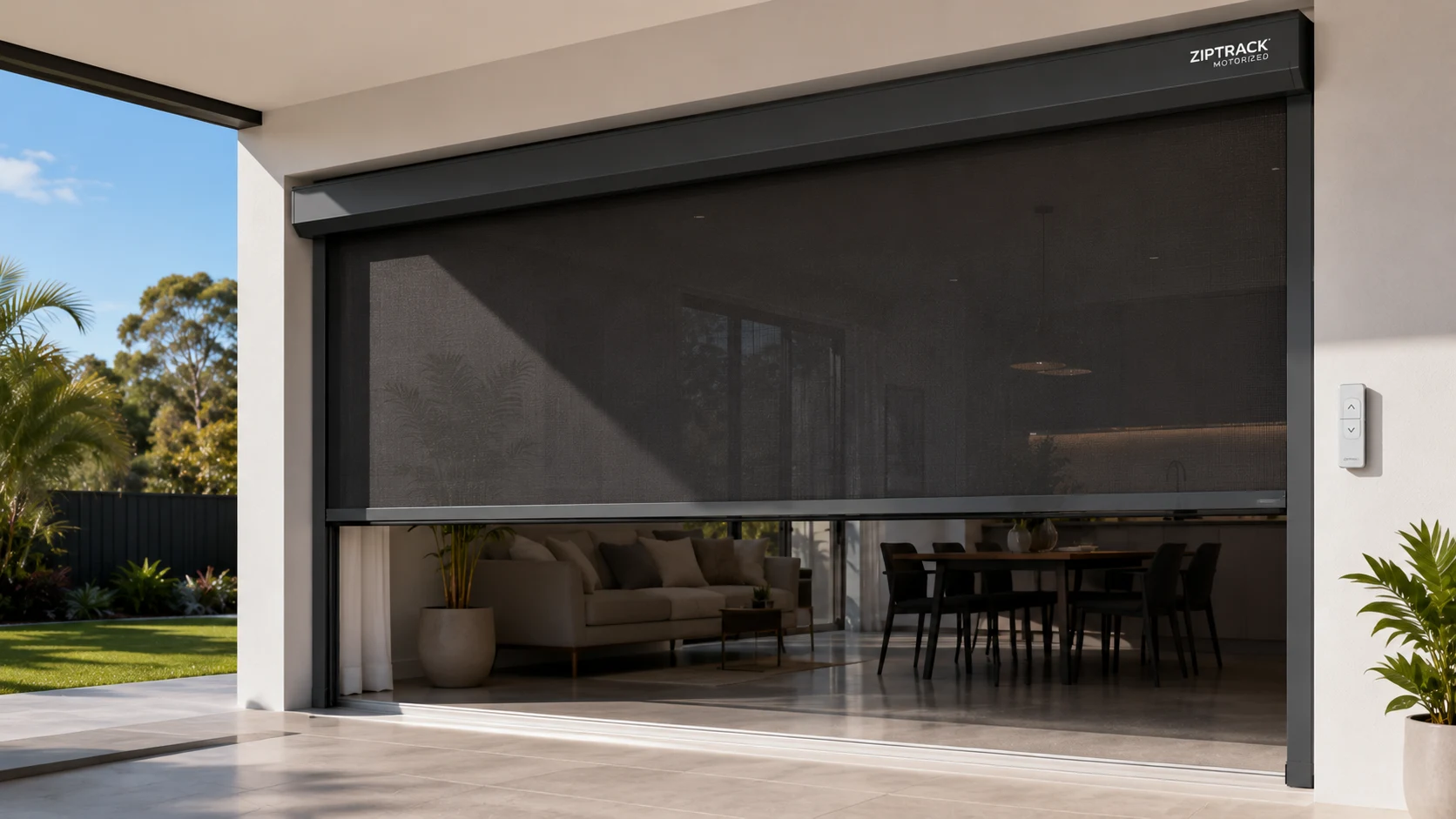
A Ziptrack screen is a premium retractable insect screen system designed for large openings — balconies, patios, French doors, and floor-to-ceiling windows. The name comes from the zipper-like edge sealing that runs along both sides of the mesh.
Unlike traditional retractable screens that rely on brush seals or magnets (which always leave tiny gaps), Ziptrack uses a patented guide track system where the mesh is physically locked into the side channels. The result? Zero gaps. No mosquito can squeeze through. No wind can lift the mesh. No rain can blow the screen open.
Key components of a Ziptrack system:
- Top cassette housing — contains the spring-loaded roller mechanism (manual) or motor
- Side guide tracks — aluminum channels with zipper profile
- Fiberglass/SS mesh — woven with a rigid edge that engages with the zipper track
- Bottom handle bar — for pulling the screen down (manual versions)
Why Regular Mosquito Nets Fail on Balconies
If you've tried installing regular pleated or roller nets on your balcony, you've probably noticed these problems:
- Side gaps of 2-5mm — mosquitoes easily slip through. Aedes aegypti (dengue mosquito) needs only 1.5mm gap.
- Wind lifts the mesh — Hyderabad's strong pre-monsoon winds (30-40 km/h) push the mesh out of the tracks.
- No bottom sealing — most nets have a 3-5mm gap at the floor, letting mosquitoes enter from below.
- Fabric sags over time — fiberglass mesh loses tension, creating sagging gaps after 6-8 months.
- Can't handle large widths — regular pleated nets struggle beyond 3 meters width. Most Hyderabad balconies are 4-6 meters wide.
A standard retractable mosquito net gives you 70-80% protection on a balcony. Ziptrack gives you 99%+ protection — the only system clinically verified to block all mosquito entry points.
How the Zipper Mechanism Works (No Gaps)
The magic of Ziptrack lies in its guide track design. Here's what happens when you pull the screen down:
- Step 1: The handle bar pulls the mesh out of the top cassette.
- Step 2: As the mesh descends, the rigid side edging feeds into the left and right guide tracks.
- Step 3: A "zipper" mechanism locks the mesh into the track — exactly like closing a heavy-duty zipper on a jacket.
- Step 4: When fully extended, the bottom bar clicks into a floor-mounted latch (or magnetic receiver for motorized versions).
- Step 5: The mesh is now completely sealed on all four sides — no gaps anywhere.
To retract, you simply lift the bottom bar slightly to release the latch, then let the spring tension (or motor) roll the mesh back into the cassette. The mesh automatically unzips from the side tracks as it goes up.
This mechanical locking system is what makes Ziptrack superior to every other mosquito screen technology for large openings.
Why Hyderabad Homes Specifically Need Ziptrack
Hyderabad has unique conditions that make Ziptrack the only practical balcony mosquito solution:
- High-rise apartments (6th floor and above): Wind speeds are 2-3x higher than ground level. Regular screens get blown open. Ziptrack's locked-in design stays secure even on the 20th floor.
- Monsoon winds (June–September): Hyderabad receives gusty winds during pre-monsoon thunderstorms. Ziptrack's zipper edge prevents the mesh from being pushed out of the track.
- High dengue burden: The Aedes mosquito breeds in high-rise buildings too — they can fly up 50+ meters using elevator shafts and wind currents. You need a 100% gap-free solution.
- Large balcony sizes: Many new Hyderabad apartments (My Home, Aparna, Rajapushpa) have 5-8 meter wide balconies. Ziptrack can handle up to 6 meters width in a single screen, and up to 12 meters using dual screens.
- Year-round mosquito pressure: Unlike North India, Hyderabad has mosquitoes 12 months a year. You need a durable system that lasts 5-7 years without sagging.
Manual vs Motorized Ziptrack — Which to Choose?
Ziptrack screens come in two versions. Here's how to decide for your Hyderabad balcony:
Manual Ziptrack (Spring-loaded)
- How it works: Pull down manually, spring mechanism assists retraction
- Best for: Balconies up to 4 meters wide, budget-conscious buyers
- Cost in Hyderabad: ₹22,000 – ₹35,000 for a standard 10ft x 7ft balcony
- Pros: No electricity needed, lower cost, fewer parts to fail
- Cons: Requires moderate effort to pull down heavy mesh (older adults may struggle)
Motorized Ziptrack (Remote/App controlled)
- How it works: Tubular motor inside cassette, operated by remote or smartphone
- Best for: Balconies over 4 meters wide, luxury homes, hard-to-reach areas
- Cost in Hyderabad: ₹45,000 – ₹75,000 depending on size and motor type
- Pros: Effortless operation, smart home integration (Wi-Fi module available), quieter operation
- Cons: Higher cost, requires power outlet near installation point
Our recommendation for most Hyderabad homes: Manual Ziptrack for balconies under 4 meters. Motorized for anything larger, or if elderly family members will be using the balcony daily.
Installation & Cost in Hyderabad (2026 Pricing)
Ziptrack installation requires precision measurement and fitting. Here's what you can expect to pay in Hyderabad:
- Site survey fee: Free (we visit your home, measure balcony dimensions, check wind exposure and mounting points)
- Manual Ziptrack (10ft x 7ft standard balcony): ₹25,000 – ₹35,000 installed
- Manual Ziptrack (15ft x 8ft large balcony): ₹38,000 – ₹50,000 installed
- Motorized Ziptrack (Somfy or equivalent motor): ₹55,000 – ₹85,000 depending on size
- Installation timeline: 10-14 days from order (custom cassette lengths and mesh need to be manufactured)
- Warranty: 3 years on mechanism, 5 years on mesh
Additional costs to factor: If your balcony has an irregular shape (curved or angled ceiling), custom brackets may add ₹3,000-₹5,000. If you need a split screen system (two screens meeting in the middle), add ₹8,000-₹12,000 for the magnetic center seal.
Pro Tip from Mr. Mosquito
If you have a west-facing balcony, opt for charcoal or dark grey mesh instead of standard black. Dark grey reflects less heat and keeps the balcony 3-4°C cooler during Hyderabad's summer afternoons. Ask our team about mesh color options during your free survey.
Ziptrack vs Regular Mosquito Net — Hyderabad Balcony Edition
| Feature | Regular Pleated/Roller Net | Ziptrack Screen |
|---|---|---|
| Side gaps | 2-5mm (mosquitoes enter) | 0mm — zipper sealed |
| Wind resistance (Hyderabad monsoon) | Lifts mesh at 25+ km/h | Works up to 60 km/h |
| Max width per screen | 3.5 meters (pleated), 2.5 meters (roller) | 6 meters (manual), 8 meters (motorized) |
| Durability in UV/rain | Fiberglass sags in 8-12 months | 5-7 years with SS304 mesh option |
| Typical cost (10ft x 7ft) | ₹8,000 – ₹15,000 | ₹25,000 – ₹35,000 |
*Ziptrack costs 2-3x more but lasts 5x longer and provides 100% mosquito protection. For balconies, it's the only system that actually works.
Ready to finally enjoy your balcony?
Get a free site survey and exact quote for Ziptrack installation on your Hyderabad balcony. No obligation — we measure, advise, and show you mesh samples.
